Choosing the right concrete anchor matters for safety and performance. Your anchor must handle the forces you put on it. It must hold for years with minimal maintenance. The wrong anchor can fail, damage your work, and cost you time and money.
Wedge anchors and sleeve anchors are two common types of heavy-duty concrete anchors. Wedge anchors give high strength in solid concrete. Sleeve anchors work in concrete, brick, and block with more versatility.
Boshi Fasteners stocks stainless steel wedge anchors and stainless steel sleeve anchors for heavy-duty projects. You can find options built to resist corrosion and handle outdoor or marine conditions.
What Is a Wedge Anchor?
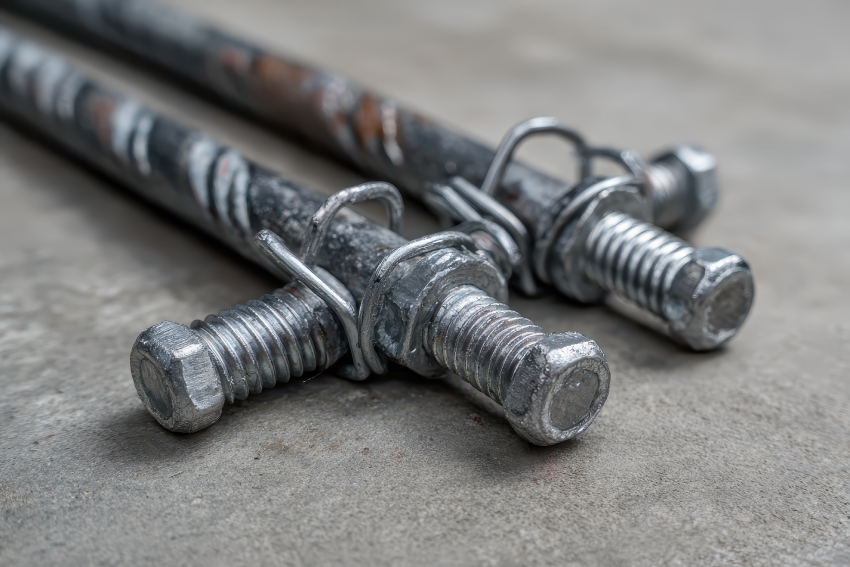
A wedge anchor is a heavy-duty concrete anchor. You install it in a drilled hole in solid concrete. As you tighten the nut, the wedge clip expands against the sides of the hole. That pressure holds the anchor in place and resists load forces.
Wedge anchors are best when you need high load capacity in solid, cured concrete. They work well for structural support, heavy machinery, and safety-critical fixtures.
Learn more about stainless steel wedge anchors including 316 stainless steel wedge anchors for corrosive environments.
What Is a Sleeve Anchor?
A sleeve anchor is a masonry anchor that works in many base materials. It has a sleeve around the threaded shaft. When you tighten the nut, the sleeve expands outward against the hole walls.
The sleeve makes the anchor hold in concrete, brick, or block. Sleeve anchors give moderate load capacity with more installation tolerance. You can use them where wedge anchors might fail.
Check our selection of stainless steel sleeve anchors for a range of masonry applications.
How They Work, Expansion Mechanism Comparison
Wedge anchors and sleeve anchors use expansion. They differ in how they grip the base material.
Wedge Anchors
- Expansion clip sits at anchor base.
- As you tighten, the wedge pulls up.
- Clip forces outward against concrete.
- Grip is strong and direct.
Sleeve Anchors
- Sleeve surrounds anchor shaft.
- Tightening pushes sleeve outward.
- Expansion grips full circumference of hole.
- Works in wider range of materials.
Wedge Anchors vs Sleeve Anchors, Performance Comparison
Use the table below to compare key features.
| Feature | Wedge Anchors | Sleeve Anchors |
| Best Base Material | Solid concrete | Concrete, brick, block |
| Load Capacity | High | Medium |
| Vibration Resistance | Excellent | Good |
| Hole Size | Precise match to anchor diameter | Slightly larger tolerances |
| Installation | Simple but exacting | Easy, more forgiving |
| Typical Use | Structural, heavy equipment | Light–medium duty fixtures |
When to Use Wedge Anchors
Use wedge anchors when strength matters. They shine in solid concrete with heavy loads.
Typical uses include:
- Structural supports
- Heavy machinery anchors
- Industrial racking
- Safety-critical loads like guardrails
- Outdoor or corrosive environments
For coastal, marine, or chemical exposure choose 316 stainless steel wedge anchors. They resist corrosion better than plain steel or 304 stainless steel.
Add internal link to 304 stainless steel wedge anchors and 316 stainless steel wedge anchors here.
If you need large quantities for a project, you can request a Wholesale Quote to get pricing based on your needs.
When to Use Sleeve Anchors
Choose sleeve anchors when you need versatility across base materials or moderate load strength.
Common applications include:
- Handrails and guardrails
- Light fixtures
- Electrical boxes
- Window and door frames
- Fastening to brick or block walls
Sleeve anchors work where wedge anchors may not grip. They fill irregular holes and hold in lower strength masonry.
See our stainless steel sleeve anchor options to match your project.
Stainless Steel Options, 304 vs 316
Stainless steel gives corrosion resistance you need in outdoor, wet, or harsh environments. Both 304 and 316 stainless steel help your anchors and stainless steel bolts last longer than plain steel.
304 stainless steel is good for general outdoor use. It resists rust in normal conditions. Use it when moisture is present but not extreme.
316 stainless steel is better in coastal or marine environments. It resists chloride corrosion that can attack other steels. If you work near salt water or chemicals choose 316.
Compare both 304 stainless steel anchors and 316 stainless steel anchors for your job.
Installation Differences
Installing anchors correctly matters for strength and safety.
Wedge Anchors
- Drill a hole sized to the anchor diameter and depth.
- Blow out dust or brush the hole clean.
- Insert the wedge anchor with threads above surface.
- Tighten the nut to the specified torque.
3 – Sleeve Anchors
- Drill a hole often slightly larger than anchor diameter.
- Clean the hole of dust.
- Place the sleeve anchor, flush or countersunk sleeve anchor.
- Tighten the nut until the sleeve expands fully.
Always match anchor length to embedment depth. If the anchor is too short it will not hold load. If too long you may hit rebar or waste material.
How to Choose the Right Anchor for Your Project
Ask these simple questions:
What base material are you fastening?
- Concrete only favors wedge anchors.
- Brick or block needs sleeve anchors.
How much load must the anchor hold?
- Heavy loads need wedge anchors.
- Moderate loads can use sleeve anchors.
Is the environment corrosive?
- If yes, pick stainless steel.
- Choose 316 for coastal or chemical exposure.
How precise is your installation?
- Wedge anchors need precise hole size and torque.
- Sleeve anchors let you work with less exact holes.
How many anchors do you need?
- If you order in bulk you can save.
- Request a wholesale quote to get pricing for your full order.
Wedge anchors vs sleeve anchors, the difference comes down to strength and versatility. Wedge anchors give high strength in solid concrete. Sleeve anchors let you work in concrete, brick, and block with good holding power.
Your project will perform better when you pick the right anchor. Think about base material, load needs, corrosion exposure, and installation tolerance. Choose the anchor that fits your conditions.
When you know the difference between wedge anchors and sleeve anchors you make better choices for safety, performance, and cost.