Choosing the right fastener affects your project safety, strength, and life. You want a nut that stays tight under load and vibration. Many people ask about lock nuts vs standard nuts and when to use each. Standard nuts hold parts together. Lock nuts resist loosening under motion or vibration. At Boshi Fasteners, we carry a full range of stainless steel nuts, including lock nuts and standard hex nuts. You can find options for light projects and heavy machinery.
What Is a Standard Nut?
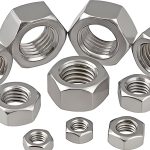
A standard nut is the basic nut used with bolts and screws. It clamps parts together with thread friction. Standard nuts are common in many applications.
Common types:
- Hex nuts, the most used type.
- Heavy hex nuts, for higher strength and larger contact area.
- Jam nuts, thinner nuts used to lock another nut in place.
Standard nuts work well when vibration is low or parts do not move. If parts vibrate a lot, a standard nut may loosen over time.
What Is a Lock Nut?
A lock nut is a nut built to resist loosening when subjected to vibration, torque, or movement. Lock nuts add a feature that creates resistance between the nut and bolt threads.
Lock nuts are necessary in:
- Machinery that runs under vibration.
- Automotive suspension and engine parts.
- Marine applications with motion and vibration.
Lock nuts give more reliable hold than regular nuts in these conditions.
How Lock Nuts Work
Lock nuts resist loosening through added friction or interference between threads.
Common types and how they work:
Nylon insert lock nuts
A ring of nylon inside the top threads creates friction on the bolt. The nylon grips and resists turning.
All-metal lock nuts
Threads are slightly deformed to create metal-to-metal friction. These work without inserts.
Prevailing torque lock nuts
They need torque to thread on and off. They resist loosening by holding tension.
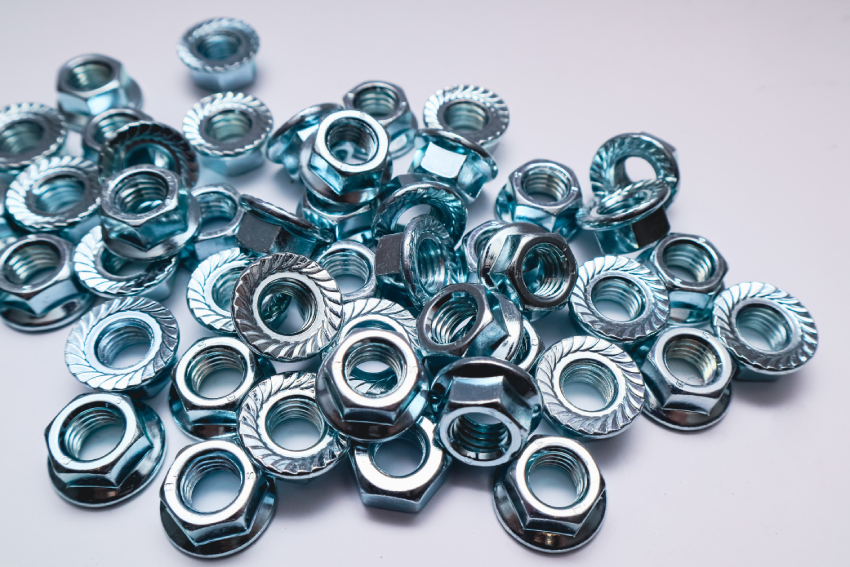
Serrated flange lock nuts
The flange has serrations that bite into the surface and resist turning.
Read our blog on everything you need to know about stainless steel nuts.
Lock Nuts vs Standard Nuts: Feature Comparison
| Feature | Standard Nuts | Lock Nuts |
|---|---|---|
| Vibration Resistance | Low | High |
| Reusability | High | Varies (nylon inserts wear faster) |
| Cost | Lower | Higher |
| Common Uses | General fastening | Machinery, engines, marine, heavy vibration |
| Installation Difficulty | Easy | Slightly more effort (torque required) |
When You Should Use Standard Nuts
Standard nuts make sense when vibration is not a concern.
Use standard nuts such as 304 stainless steel hex nuts and 316 stainless steel hex nuts for:
- Everyday household projects.
- Indoor furniture assembly.
- Fixtures, cabinets, and shelving.
- Machinery with minimal motion.
- Budget-conscious applications.
Standard nuts cost less and are easy to install.
When You Should Use Lock Nuts
You should pick lock nuts when parts move or vibrate.
Choose lock nuts such as 316 stainless steel nylon lock nuts and stainless steel all-metal lock nuts for:
- Engines, motors, and compressors.
- Vehicle suspension and steering joints.
- Marine hardware on boats or docks.
- Outdoor equipment that sees motion.
- Machinery that shakes during use.
Lock nuts help keep threaded fasteners tight under motion.
Request a Wholesale Quote
Stainless Steel Options: 304 vs 316
Stainless steel resists rust and corrosion. You can choose different grades for your conditions.
304 stainless steel resists corrosion in most environments. It is a common choice for general use.
316 stainless steel resists corrosion better in harsh or salty conditions, like marine use. For lock nuts that stay tight on boats or near water, 316 is often the better choice.
How to Choose the Right Nut for Your Project
Use these factors to decide fast:
- Vibration exposure: If your project shakes or moves, lock nuts are more reliable.
- Environment: Outdoor, wet, or salty conditions favor 316 stainless steel.
- Strength and grade: Match the nut grade to your bolts and load needs.
- Reusability: If you remove and reassemble often, pick a nut type that holds torque after cycles.
- Budget: Standard nuts cost less upfront, but lock nuts can prevent costly failures.
You can sort by type and size to find the best nut for your work. Choose the correct diameter, thread pitch, and grade.
Conclusion
Comparing lock nuts vs standard nuts helps you pick the right fastener for your job. Standard nuts fit general tasks with little motion. Lock nuts will help where vibration or movement can loosen regular fasteners. Boshi Fasteners stocks both types in stainless steel, including 304 and 316 options for corrosion resistance. Select the right nut to match your environment, motion, and strength needs.